> Development > Rural market


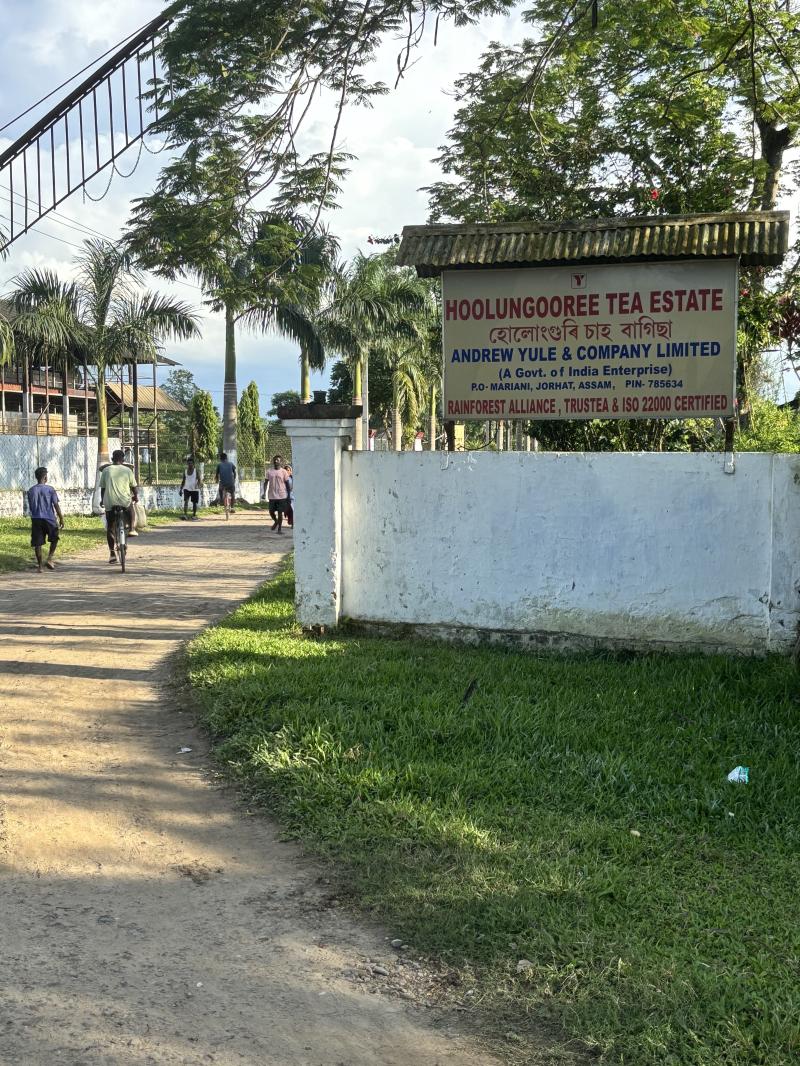
Every Friday and Tuesday, a piece of Assam’s living history comes alive in the form of the weekly haat (market) in Hoolungooree, a tea garden village just 10 km from Mariani town. Here, time has passed, generations have changed, yet the rhythm of the market continues—beating a little differently today than it did decades ago.
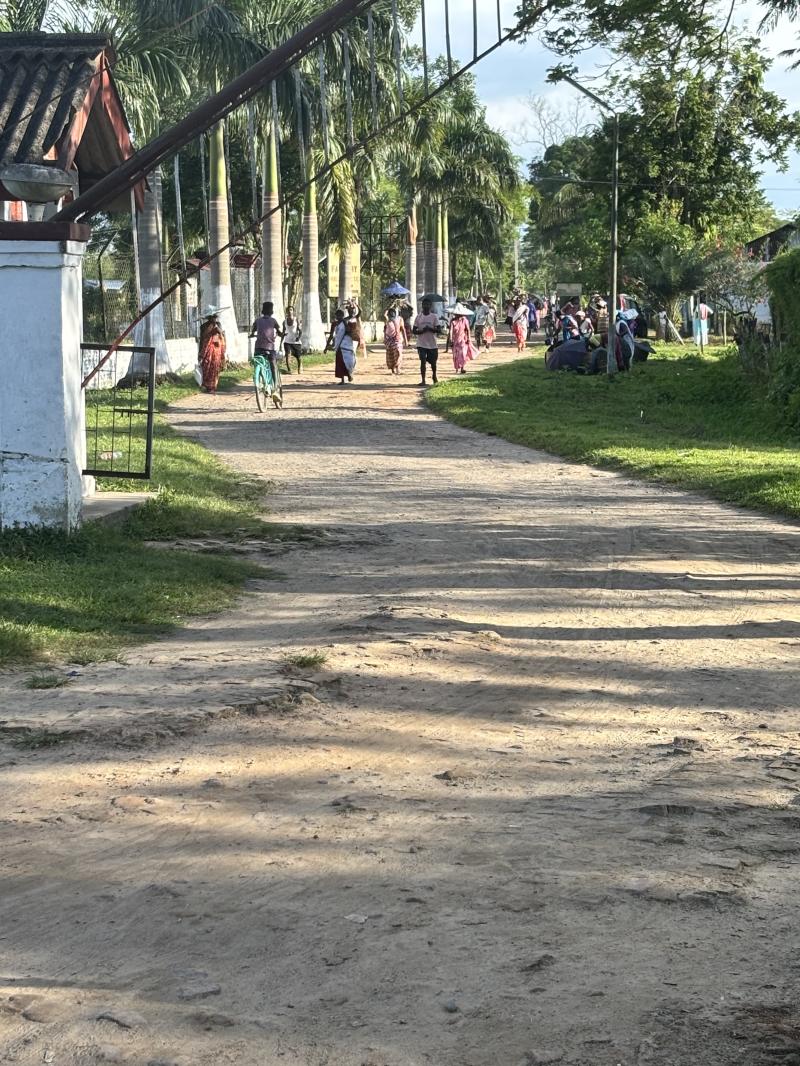
A Tradition Rooted in Tea and Time
Like many villages across Assam, the tradition of the weekly haat in Hoolungooree traces back to British times. But here, it wasn’t just commerce—it was community. The haat was shaped and reshaped over time by the economic pulse of the tea garden, the very lifeblood of this region.
The haat originally took place at a central spot in the middle of the village—an open ground where sellers once spread out their goods on mats under the open sky. With time, the village took steps to formalize the space. Flooring was laid to keep the area clean and accessible, and sheds were built to protect both sellers and their goods from rain and harsh sun. What was once a dusty patch of land is now a defined space.
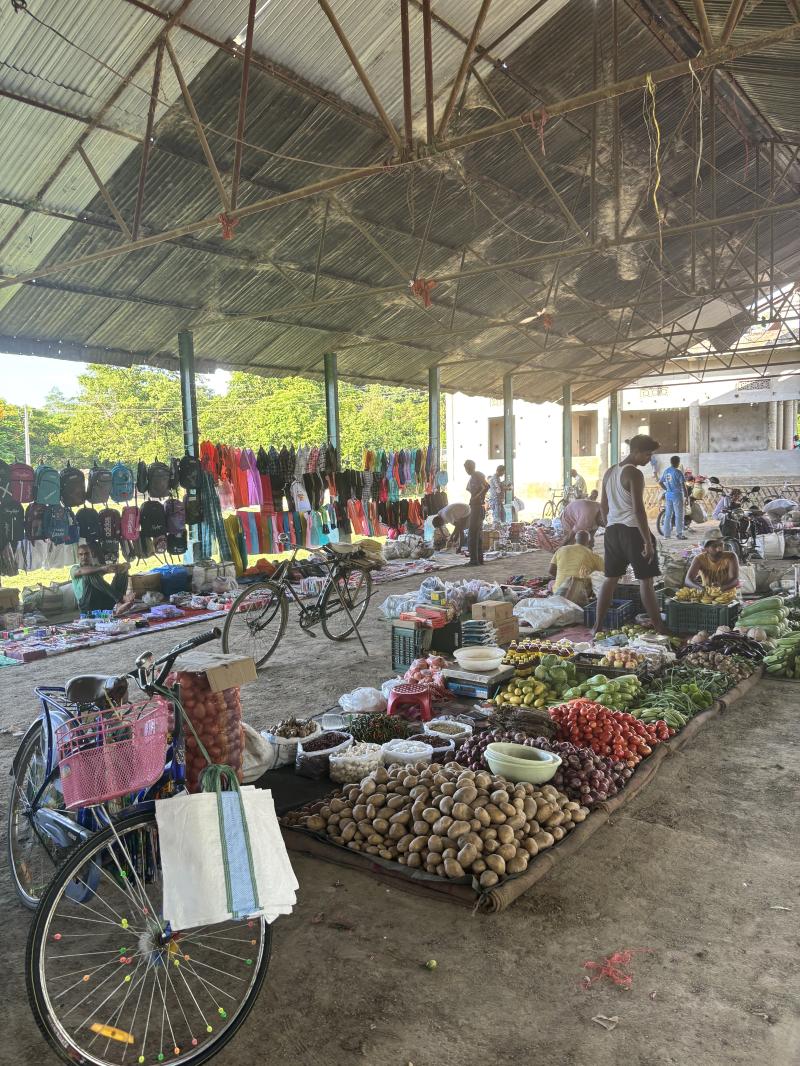
Holoonguri Tea Estate is home to hundreds of families whose lives revolve around tea. Generations have plucked leaves under the same sun, and the wages earned found their way—almost ritualistically—into the hands of haat sellers. For years, weekly payments were made on Fridays. Naturally, Friday haats flourished. Sellers came from nearby villages, carts packed with groceries, vegetables, sweets, clothes, even iron tools. And people came with pockets just filled with wages, ready to spend on the week’s needs. That link between the garden's payday and the haat’s prosperity was more than coincidental—it was structural. For decades, the weekly payment system fed the haat. But when the payment schedule shifted—from every Friday to every 15 days, and eventually to irregular digital bank transfers—the haat’s rhythm was disrupted.
The alternate Friday haats briefly became more prominent. But with the advent of digital banking, the money no longer flowed directly into hands. It trickled into accounts, slowly withdrawing the cash flow that once surged through these market lanes.
A Seller’s Story:
At the far corner of the haat, sits 76-year-old Bholanath Jaiswal—one of the oldest surviving witnesses to the market's evolution. His grocery stall, modest yet familiar to many, has stood here since 1965.
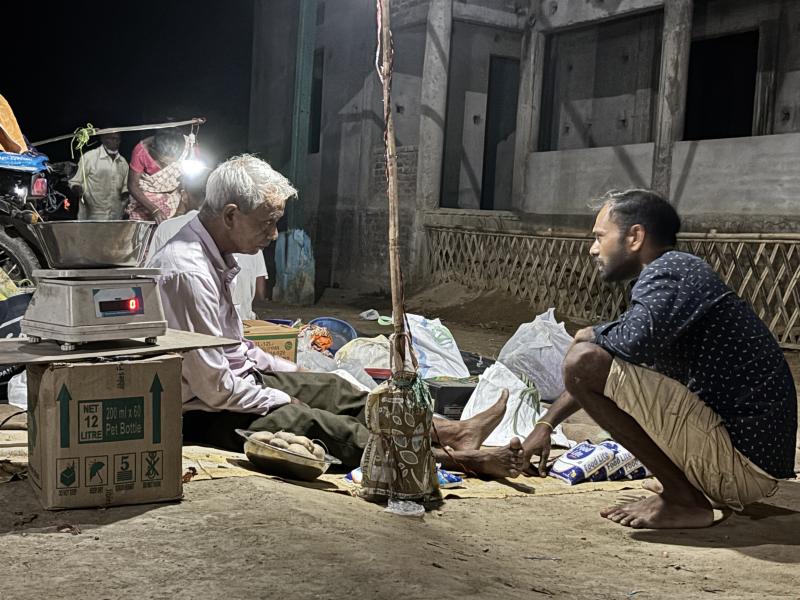
“I came here with my parents and three siblings from Misamara, near Dergaon,” he says, adjusting a line of small mustard oil bottles. “Family quarrel drove us out. But this haat? It gave us life.”
In the 60s, he recalls, very few sellers came. Back then, he arrived on a horse cart, stacked with goods. “By evening, everything would be sold. We returned home with empty carts and full hearts.”
The numbers rose steadily in the 70s and 80s. Sellers, customers, children—all gathered not just to buy and sell but to socialize, catch up, live.
Now, Jaiswal says, he sees a slow decline. “People have options now. Roads are better. They go to Mariani to shop, where ATMs are plenty and network coverage is better.”
The digitization of payments was meant to bring convenience. But here, it has brought complications. Few shops accept online payments—only about 10% of sellers, by some estimates. The rest rely on cash, and cash isn’t what it used to be.
With no bank branch or reliable network nearby, villagers travel to town to withdraw their wages—often spending a portion there itself. The flow of money into the haat has weakened. Still, the haat persists.
Another Voice from the Stalls: Parameshwar Gupta’s Journey
Not far from Bholanath ji’s stall is Parameshwar Gupta, who joined the haat as a seller when he was just 15 years old. Now 35, he is among the younger generation of long-time vendors. He started with nothing more than a few baskets of fresh vegetables. Over the years, he added groceries to his stall and, during festive seasons, expanded his shop—selling toys during Durga Puja, colours during Holi, and earthen diyas for Diwali.
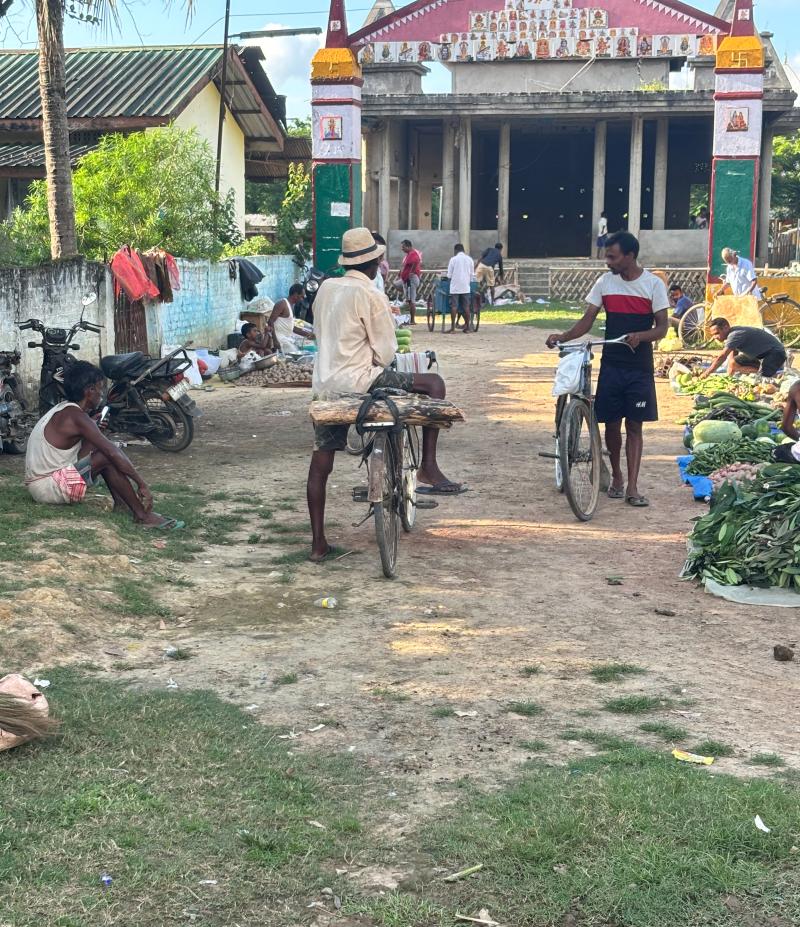
“Earlier, before Durga Puja, we used to travel all the way to Kolkata with other sellers to buy toys for the haat,” he recalls. “It was exciting, and the demand was huge. But now? There’s no such demand, and going that far is no longer affordable for us.”
Parameshwar Gupta echoes the same concern about changing purchasing patterns. Many villagers now prefer to shop in town markets or malls. He points to one example: “Take Suman Kalandi—he used to come here every week with his father. Now he shops only from Mariani or Jorhat malls. But his father still comes to the haat for everything. That’s the difference between the old and the new generation.”
For Parameshwar, the haat is more than a place to sell—it’s a part of his life story. Yet, like many sellers here, he wonders what its future will look like.
What’s on Sale, What’s at Stake?
Wander through the lanes of the haat, and you’ll find vegetables fresh from backyard farms, sweets wrapped in newspaper, rows of bright bangles, saris hanging from bamboo poles, spices that tingle your nose. It’s all still here—just a little quieter.
Some sellers still come with hope in their hearts, waiting for the Fridays when payments arrive. Others, like the younger vendors, are unsure if they should continue. “Sales are unpredictable,” one of them says. “Some days you return home with most of your stock.”
Yet, every Friday and Tuesday, the haat is rebuilt—stall by stall, story by story.
A Legacy in Transition:
This weekly haat isn’t just a marketplace—it is a reflection of an entire community’s journey. From horsecarts to smartphones, from cash payments to bank transfers, from tightly packed Friday crowds to quieter, uncertain Tuesdays—everything has changed, and yet something remains.
As long as people like Bholanath ji show up with their small sacks of rice and stories of resilience, the haat will live. Maybe smaller, maybe slower—but it will live.
Because in Holoonguri, the haat is not just where things are sold—it’s where memories are made, generations meet, and the past gently taps on the present’s shoulder.
 Navigations
  Quick Contact
 Subscribe Us
 Quick Mail