> Development > Livelihood


Phulmaya Thapa, a soft-spoken woman draped in a faded saree that seemed to carry the weight of her years as a tea garden worker was busy plucking tea leaves along with other women workers in the Birjhora Tea Estate in Assam’s Bongaigaon district. She retired as a permanent worker of the garden but did not have the luxury of a retirement life. Even after more than two decades since she retired, financial woes compel her to work as a temporary and seasonal worker in the garden to make both ends meet.
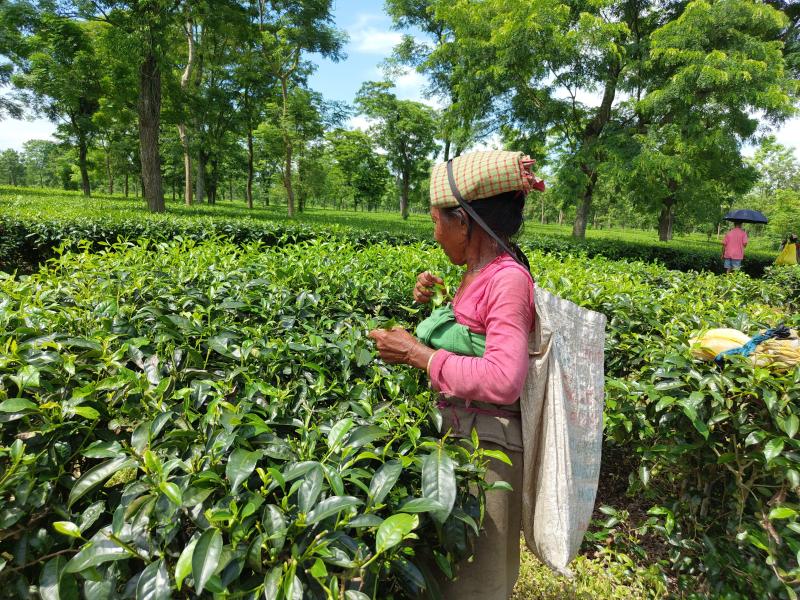
Grey hair that peeked from under her saree and her palms rough from decades of plucking tell the untold stories of women tea workers. These stories of pain and resilience lay covered by the familiar scenes which unfold at each dawn break over the quiet green plains of the tea estate: group of women workers, baskets strapped to their backs and scarves shielding their faces, walking into the mist-covered rows of tea bushes to pluck the fresh green leaves.
She began working in the tea garden when she was just 15 and all her childhood dreams were lost in the rows of tea bushes. “I worked for daily wages of 10 to 15 rupees back then,” she said, her voice steady with memory. “If we plucked more than 18 kilograms, we got 17 paisa extra per kilo.”
Her father and husband both worked in the garden too as drivers. In 2003, she officially retired.
But retirement, for her, was just a word. “I still work,” she said. “I get no facilities now, only tea as ration. My daily wage is 250 rupees, but I’m not happy. Earlier, when I earned less, I was happier. Now, expenses are too high. Even for basic items, I have to think many times.”
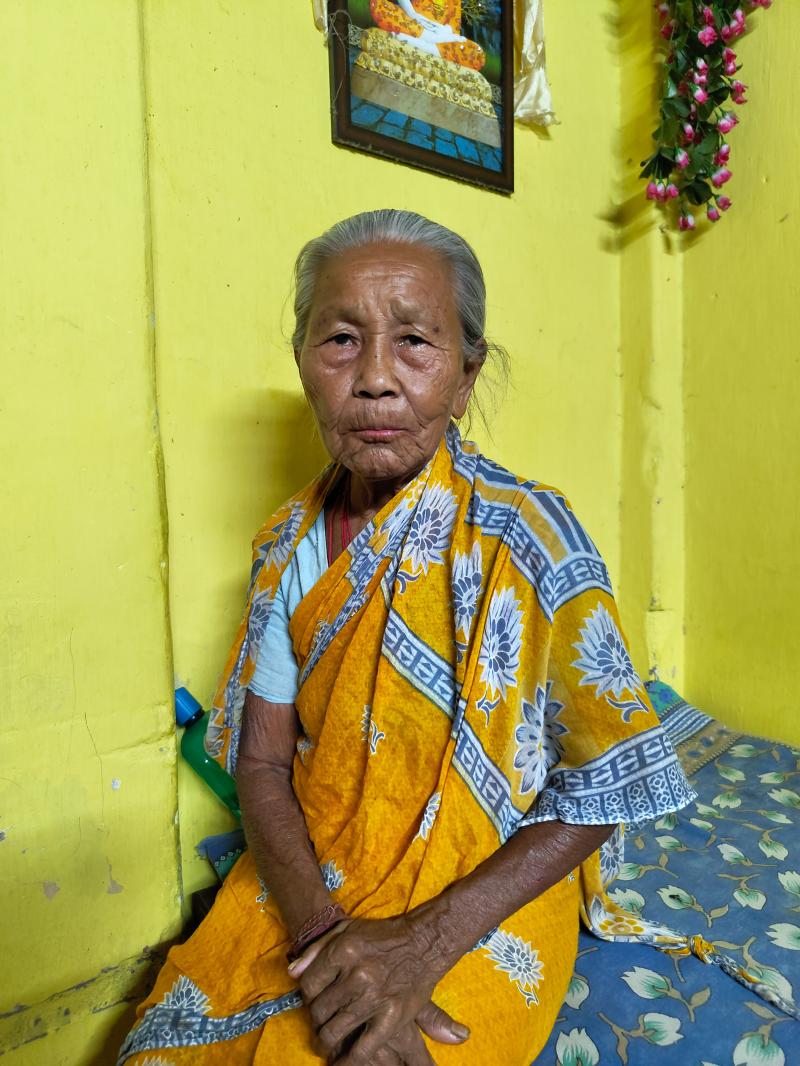
Her gaze lowered as she mentioned her son lost to time and misfortune. Yet she works on, carrying sorrow and survival together.
With umbrella in hand and determination in their eyes, they begin their daily task of plucking fresh tea leaves, a task they have performed for generations, often unseen and unheard. Their day begins early, stretching across eight hours of labour with only a short one-and-half hour break for lunch. Whether under the blazing sun or during lashing monsoon rains, their work rarely pauses.
Nature, too, does not make it easy. Insects, leeches, and venomous snakes hide within the dense green rows, making each step through the tea bushes a risk.
Along the red-earth paths of the tea estate, the air was already heavy with the scent of fresh leaves and damp soil.
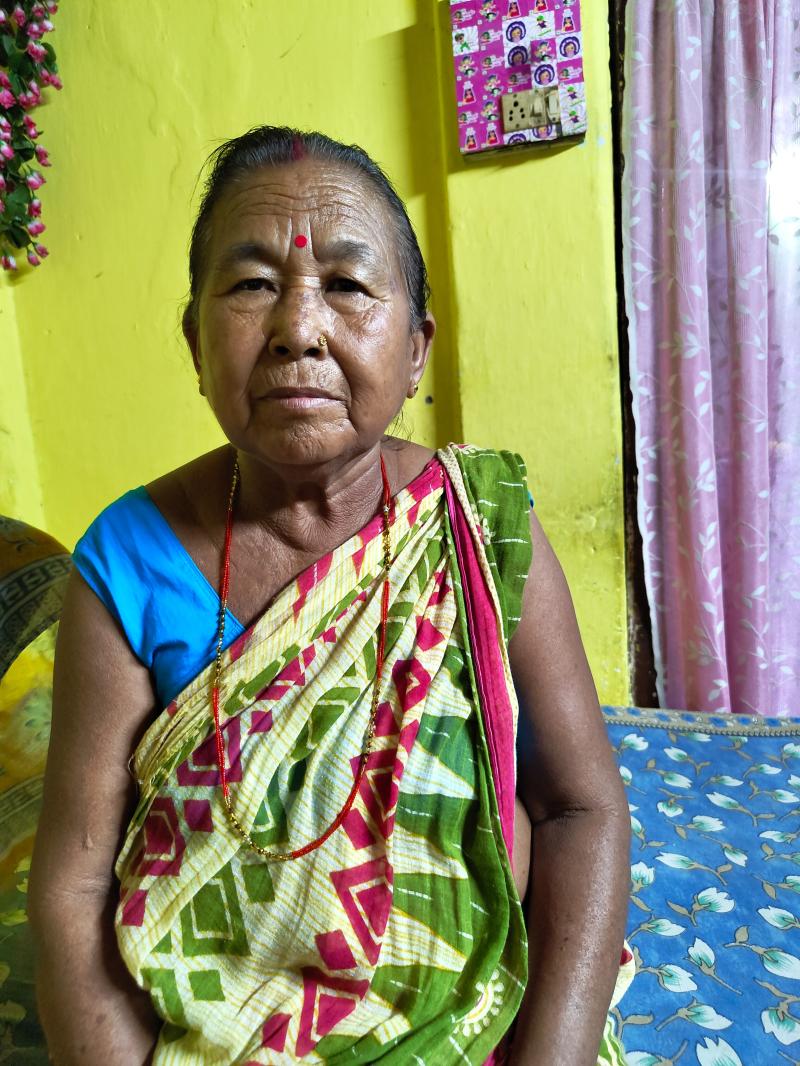
Sitting beside her was Khinmaya Lama, another pillar of the garden, whose hands have been plucking tea for over 50 years. “I was scared when I joined, after my marriage,” she chuckled.
“But years passed, and I stayed.” She too is now retired but continues working. “When I was permanent, we got work even in off-seasons-leaf cutting, weeding, even at the factory. But now I only get six months of work. The rest of the time I sit at home.” Her family has moved on - three sons and two daughters, all working or married outside the tea world. “They don’t want this life,” she said.
Not far from them, Saina Das, a current permanent worker, shared her side. “Because I’m permanent, I get some facilities - rice, tea, sandals, tarpaulin for rain, and sometimes flour.”
Her voice carried both pride and anxieties of uncertain life post-retirement. “But for non-permanent and retired workers nothing.” She earns 250 rupees daily and gets work all twelve months, but that doesn’t mean the work is easy.
“Rain or sun, we work. Leeches crawl up our legs, snakes hide under bushes, but we have to pluck. No plucking, no pay.” She cannot leave this job because her PF (provident fund) will be cut. “So, I stay. No choice.”
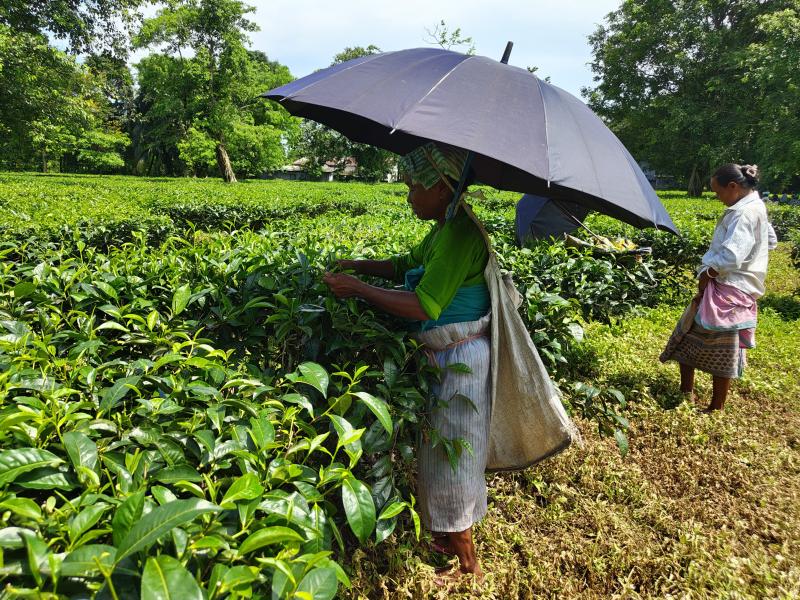
Pinky Das, another worker with stories of both struggle and hope narrates how they try to keep their dreams alive, if not their own but at least those of their children. “Yes, there’s a school here in the tea garden,” she said, “but I send my children to the town. I want them to learn more, dream bigger. I don’t want them to live like me.”
She mentioned the small hospital run by the tea garden. “It helps, but not much. And the Orunudoi government scheme? That little money does help me sometimes.”
They start returning home after every working day’s hard work with the hope that their children won’t have to endure what they did. Insects, sunburns, rainy mornings, lost wages - none of it stops them. They keep plucking. Because, behind every cup of tea that is sipped is the untold story of women who do not stop, even when the world forgets to look their way.
As the long day came to a close, the whispering sound of tea leaves being dropped into baskets still echoed the stories of resilience of women workers who toil even after their retirement to make Assam tea one of the most preferred choices of tea lovers across the world.
 Navigations
  Quick Contact
 Subscribe Us
 Quick Mail