> Photograph > Photo Story


Rain trickles down the thatched roof, a distant sundown paints the sky in vivid orange hues. With a cup of tea in hand, Anil Mohon looks at his courtyard, then at his wife Usha Mohon. Deep in thought he sighs “Hopefully the weather will be good to us tomorrow!” He walks out his gateway - and sees Sukheswar Mohon, Monuranjan Mohon and Dilip Mohon approaching.
Anil Mohon expresses his distress about the weather spoiling the occasion tomorrow. They walk into the house humouring about the arrangement of rice wine for the next day, “If the rice wine is ready, we can get to work tomorrow despite everything.” A relieved Anil Mohan discusses with them the itinerary for the next day, assigning each of them the responsibility of arranging equipment that will be required. They send for Montu Mohon, because he shall play one of the most significant roles the next day – tilling the ground for sowing the harvest.
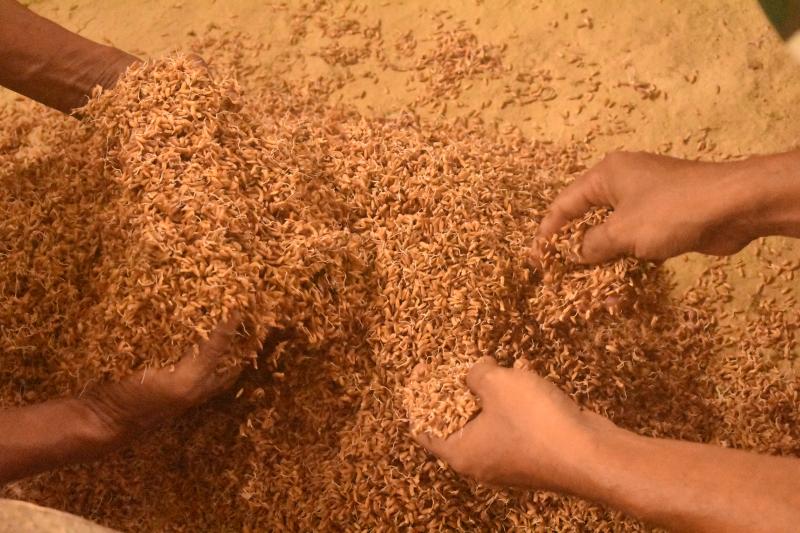
As dawn breaks, a clear day seems to be in the cards. Everybody gathers excited, energetic, bracing for the promising activity of Seed sowing in Jajali Habi village in Charaideo district in Assam.
It’s time to begin the activity! says the one who was asked to come over to help with the process. Savouring a mouthful of betelnut, he lifts up the k?r (a hoe), and so it begins-
With the advent of the Assamese calendar month of Ahar(mid-June to mid-July), the Assamese community gears up for another season of harvest. Time has come to sow the seeds for the season now. Indulging in this traditional lineage of setting the ground and preparing it for farming, goes far beyond just economics for the community. It is a space for expression - the farming ground for tradition, culture and economy.
The season of seed sowing signifies an important time for the community. It represents a deeper metaphor than just farming. It's a holy ritual that presents the legacy of their lands, lineage and their economics. The seed sowing practice, traditionally, was a spectacle that stood for bringing the community closer. It stood as a heritage to progress and development of community - effect, and the residue.
The farming land is a sacred ground for the expression of this development and it stands upright as a badge of tradition and its multifaceted ramifications.
The process begins with the scouring of a source of clean water to channel into the seed-sowing ground. This channel is often sourced through rain-water harvesting fresh water ponds or in a more modern scenario - using a motorised pump. In this scene however, the source was a cut-out canal alongside the harvesting ground. Thus, the process of seed-sowing, known as “Kothia Pora” begins.

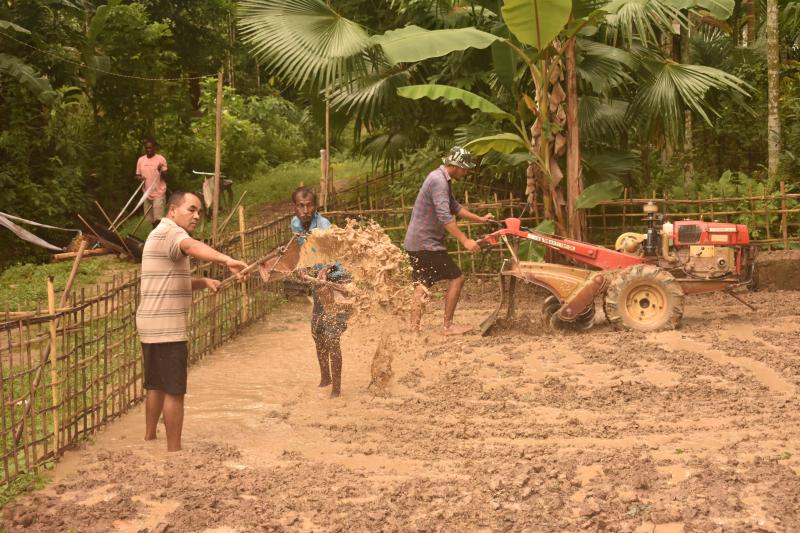
Then comes the use of a special instrument called Duhoti. This instrument is used to carry up the water from its source, to the channel, and finally into the sowing ground. The purpose of water sourcing is to dampen the ground, to prepare it for sowing. However, the use of a motorised pump skips the use of a Duhoti.
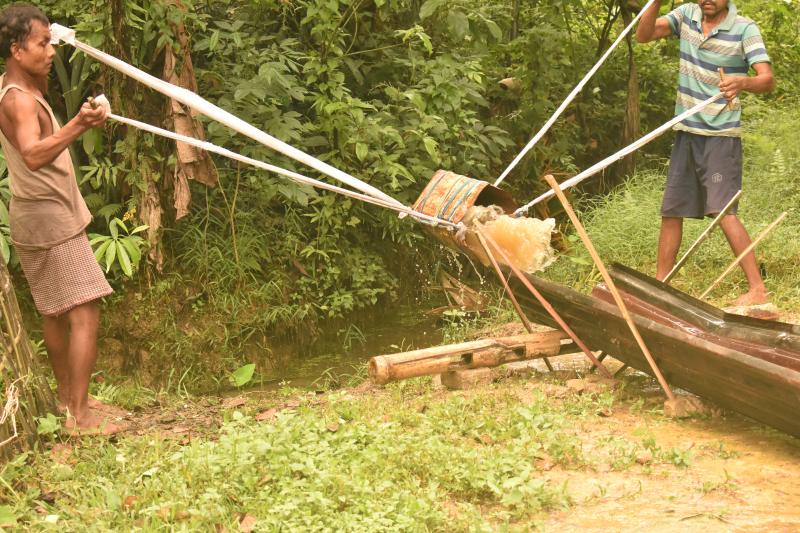
This instrument uses an empty oil tin with handles tied to its end to yank it over, using both hands. Perhaps, the manner of operating it with both hands led to its name Duhoti, “use of both hands”, they explain.
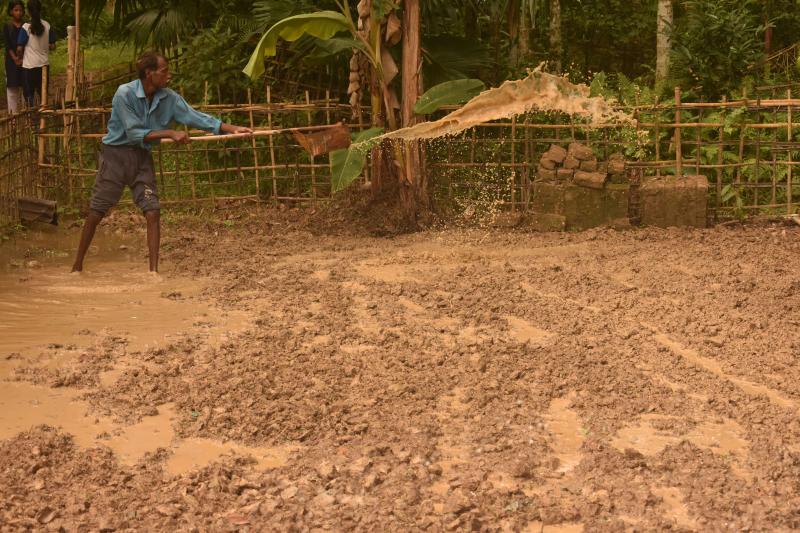
Once the water hits the sowing ground, another traditional agricultural implement comes into play. This implement is called Laahoni. It helps spread the gathered water throughout the ground, speeding up the preparation.
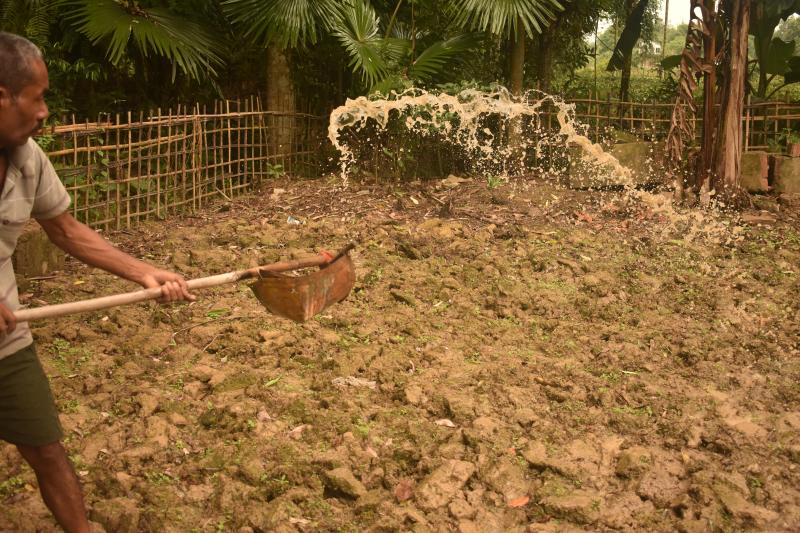
There are famous tongue twisters in Assamese which describe the making of the Laahoni- Nahor Nalor Laahoni (Laahoni with Rose Chestnut handle). The Laahoni comprises two portions - the handle and the container. The handle is often made of bamboo- although ideally the use of Indian rose chestnut or “naahor” is prescribed, - and the Laahoni from a cut and bent up steel tin.
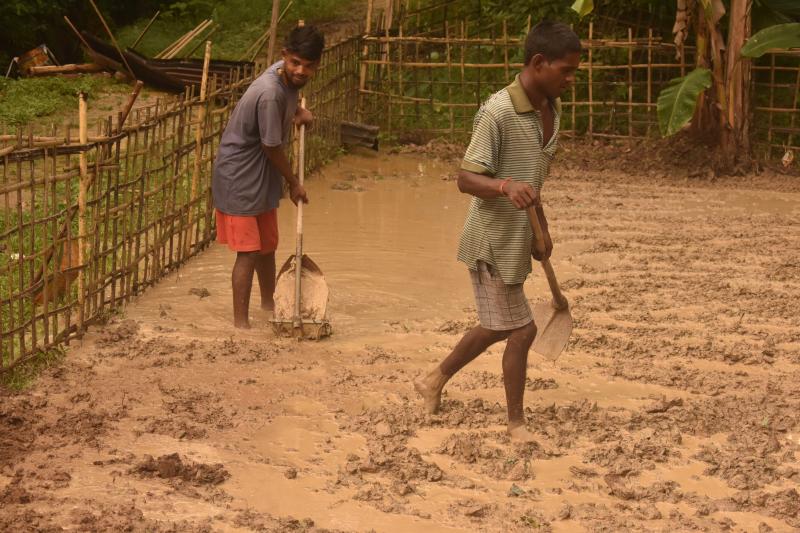
The kor and Laahoni now work together to moisten the grounds further.
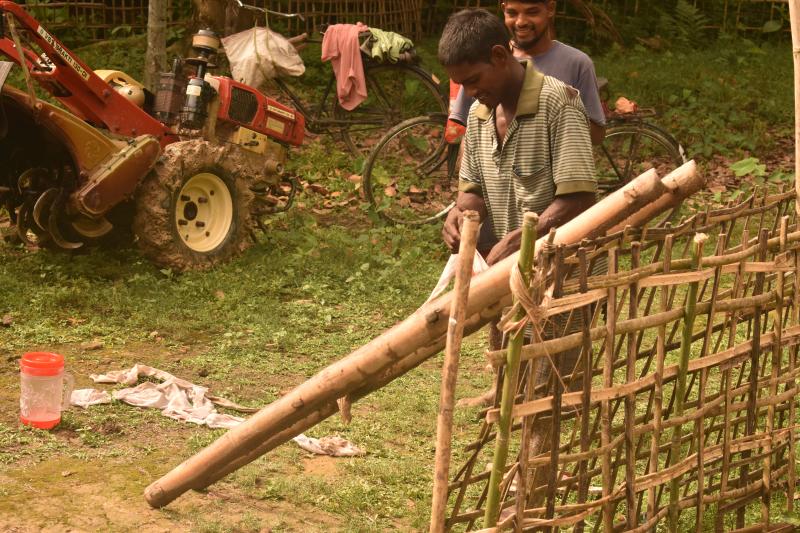
Traditionally, an ox-drawn plough or a buffalo-drawn plough were used. But, with the growth of technology, power tillers are used. The coherence of traditional and contemporary is seen in the image constituting both the Laahoni and the power tiller. It invoked a powerful symbol of connection between the traditional roots of farming techniques and its modern counterparts.
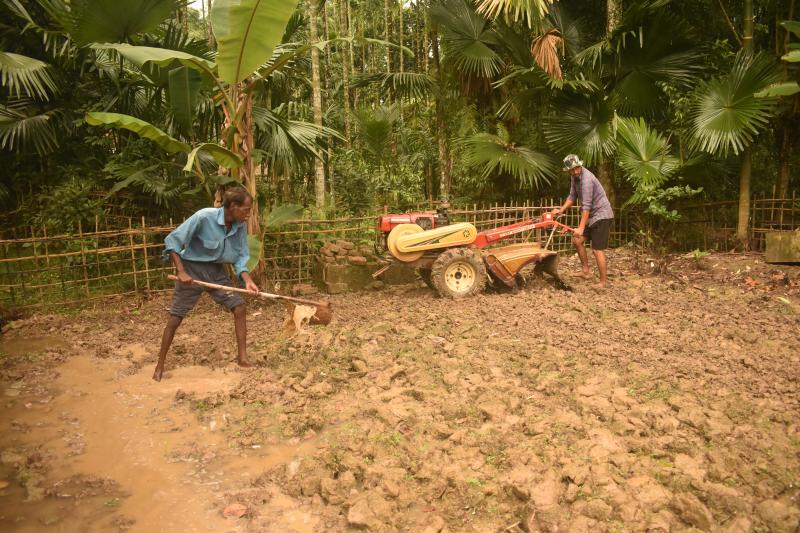
The process continues until the ground is thoroughly prepared for sowing. All these instruments simultaneously operate to bring the desired impact.
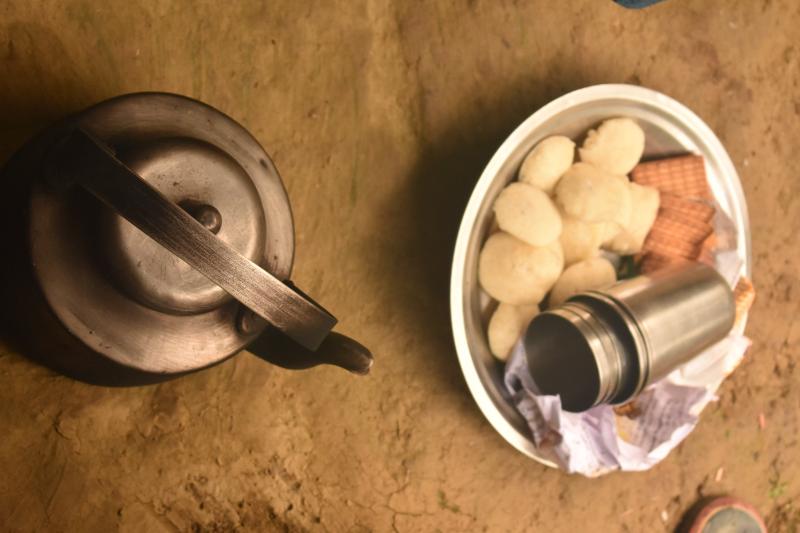
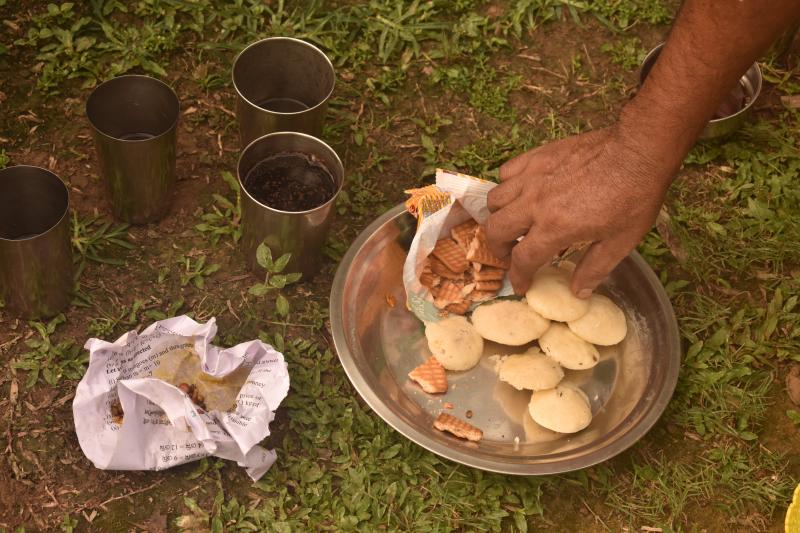
While this goes on, the women folk are engaged in serving leisure snacks to the people involved. Several eatables come out of the kitchen, which the men folk devour in a jolly ambiance fuelled by humour, nostalgia, anecdotes and innuendos. These foods range from a variety of Pitha Pona (Roice cakes) to Tamul Pan ( Betel Nut and leaf) to culturally appropriated ‘idlis’ which are a version of a traditional rice cake called Tekeli Mukhot Diya Pitha. (Rice cake made by steaming it on the mouth of an earthen jar. As time passed, the kettle replaced the earthen jar. )
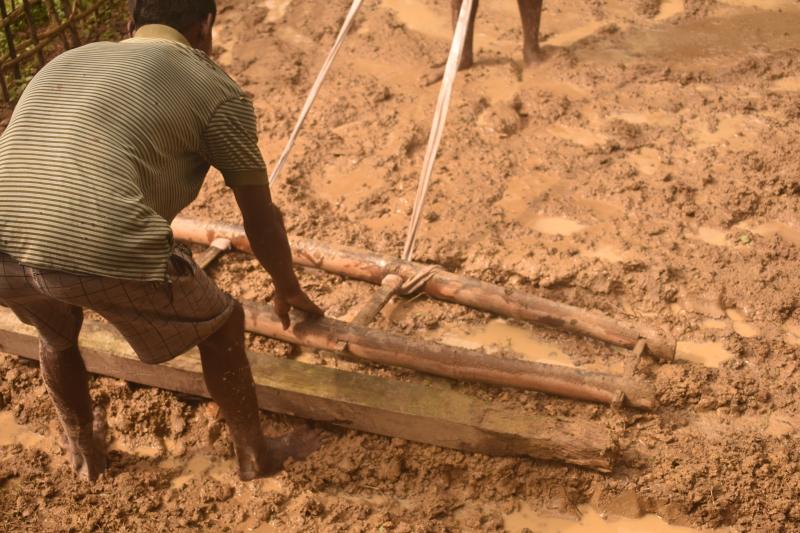
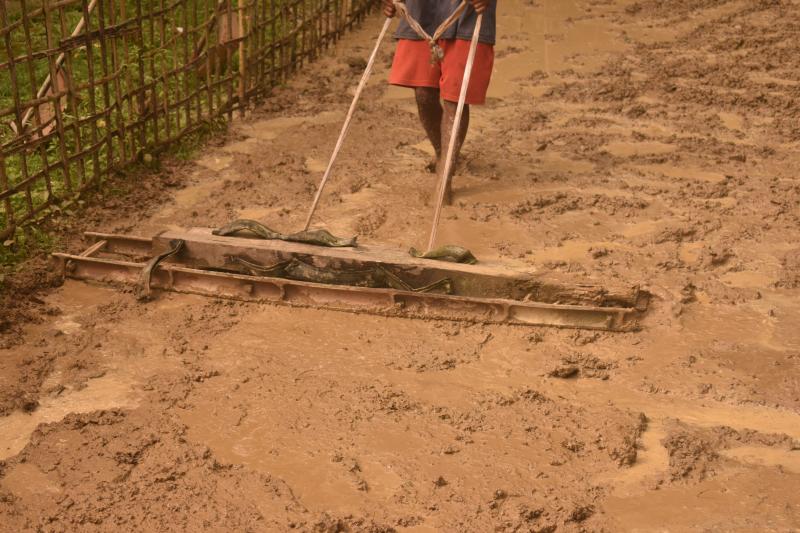
The next implment that comes into play is the Moi. The Moi is like a horizontal ladder, which is used to even out the sowing ground before sowing the seeds. It is pulled through, with some amount of pressure placed on it which helps even out the ground better. This activity also entails sporty endeavours for children, where they stand on the Moi which is pulled by an ox, bull or cows. Although for smaller areas, sometimes, animals aren't engaged.
The seed comes out which is previously kept aside for harvest. For the community, this seed is holy, it is Lakshmi, the Goddess of fortune. This is what feeds the community, this is what brings them prosperity. This seed is divine to them.
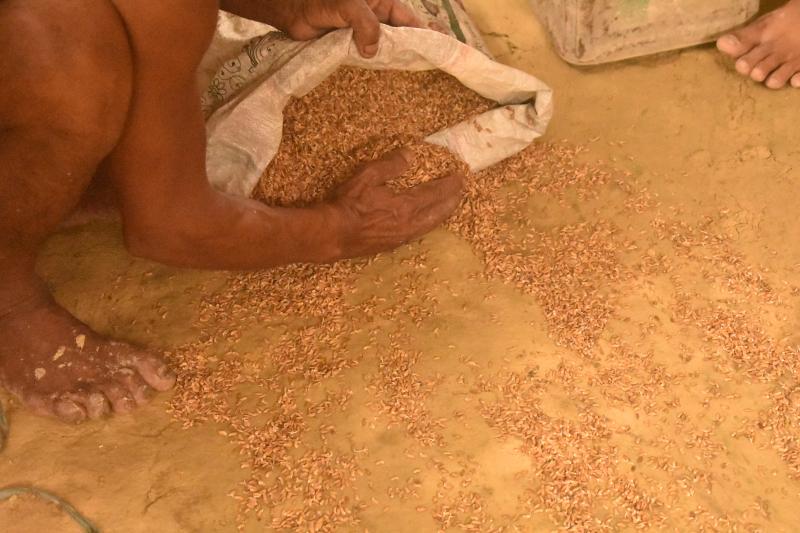
The stored seeds are lined with natural pesticides: a kind of bitter leaf mixed with it so that pests and insects keep away. Neem, Chirata are used as natural pesticides, they say.
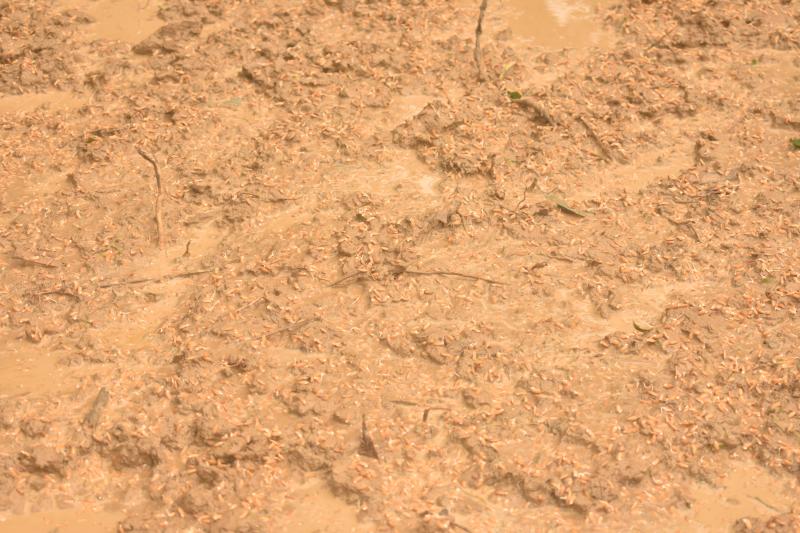
The golden grain is now ready to be sown.
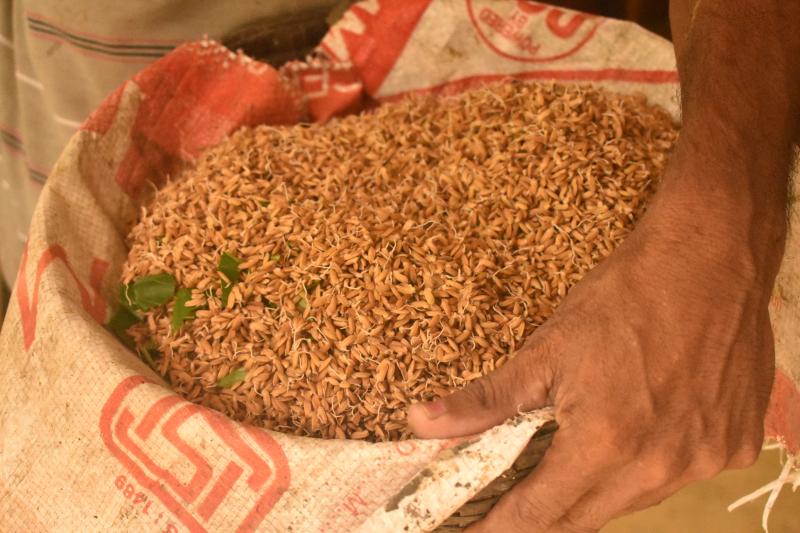
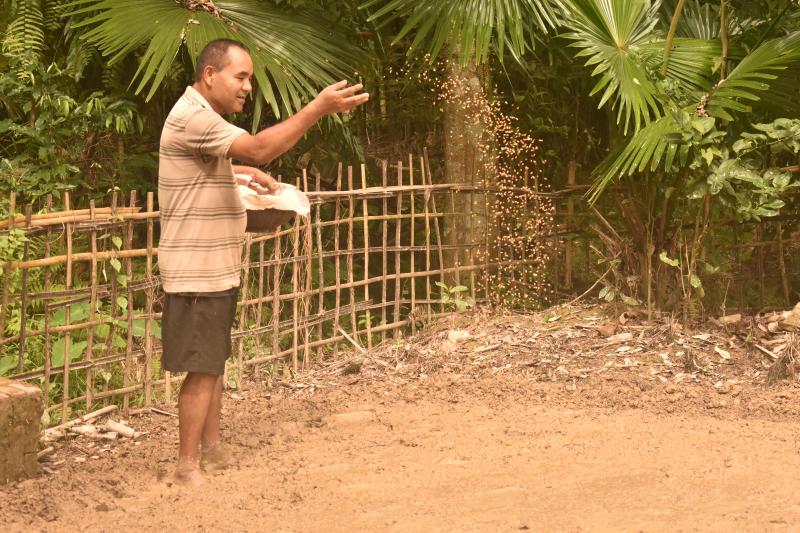
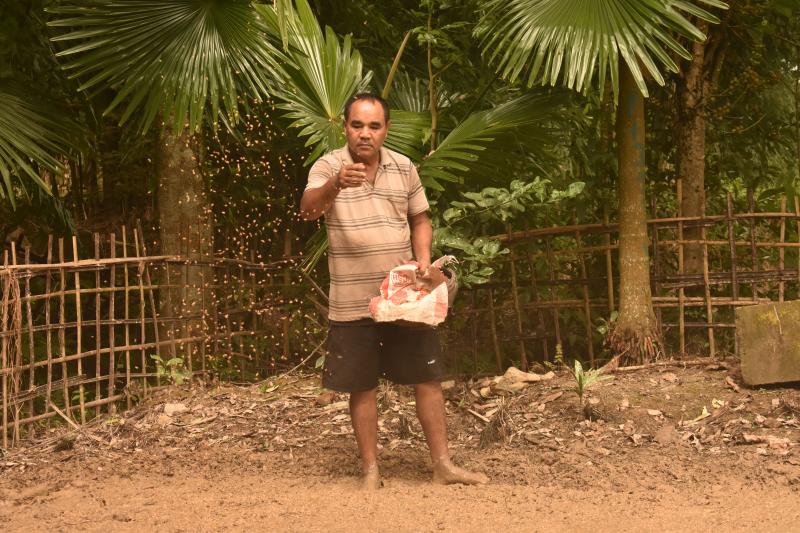
With chants to the God almighty - to bring enough harvest to feed the birds, the community, the poor and the rich and still have enough to feed the family itself - the sowing begins.
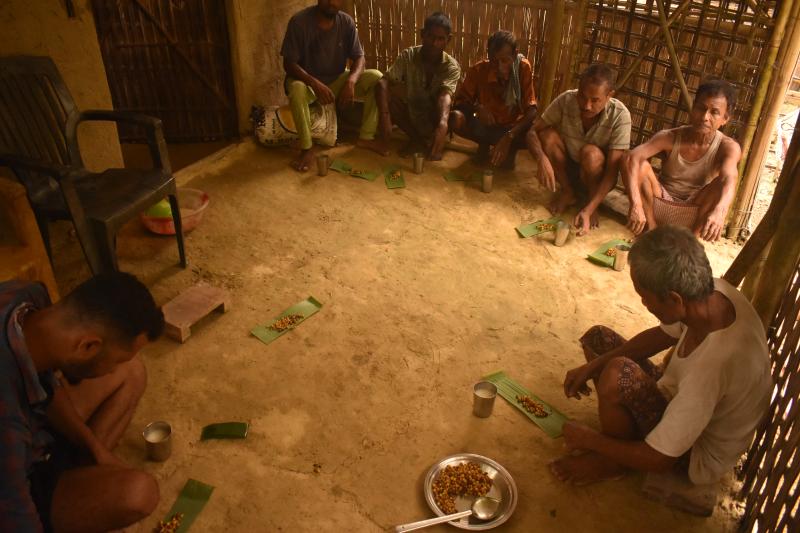
The cultural assortment continues as the tired men folk sit for a friendly sip of Laopani, Rohi Saj– a type of locally prepared rice beer - shared at the completion of a successful Kothia pora or seed sowing session. Stories are shared, among the people who were involved in the activity. This becomes a space for companionship, comradery, cultural exchange and much more.
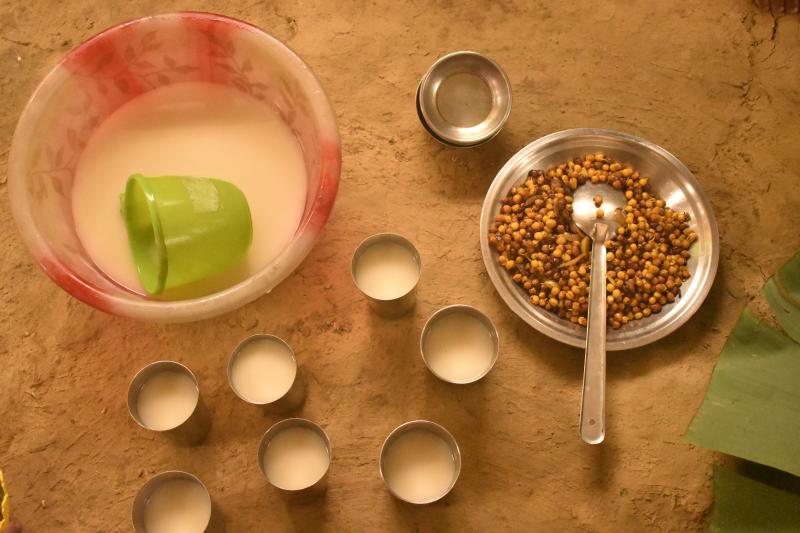
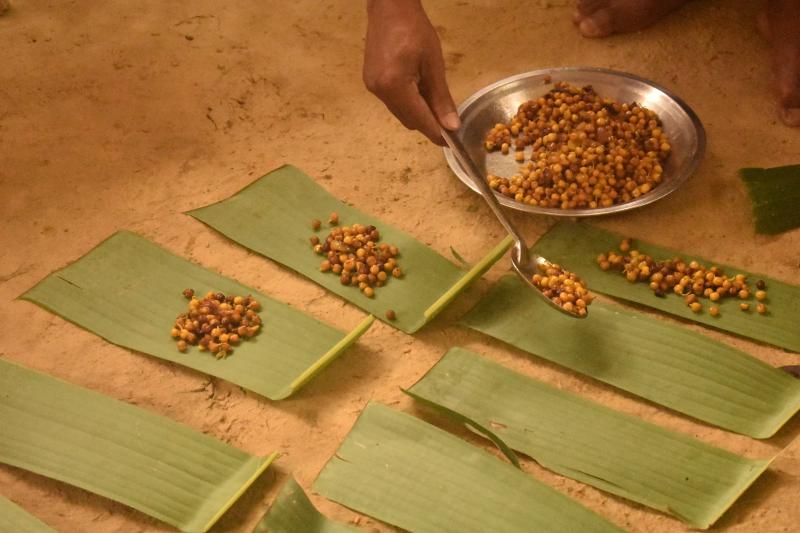
The event of seed sowing is a tedious effort that ensures a healthy harvest. It marks the beginning of the farming process. The tired men-folk enjoy a hearty meal prepared by the women folk who were tirelessly working in their kitchen scape. With blessings from the ancestors and everyone helped in the event, this one meal is a symbol that promises legacy and brotherhood.
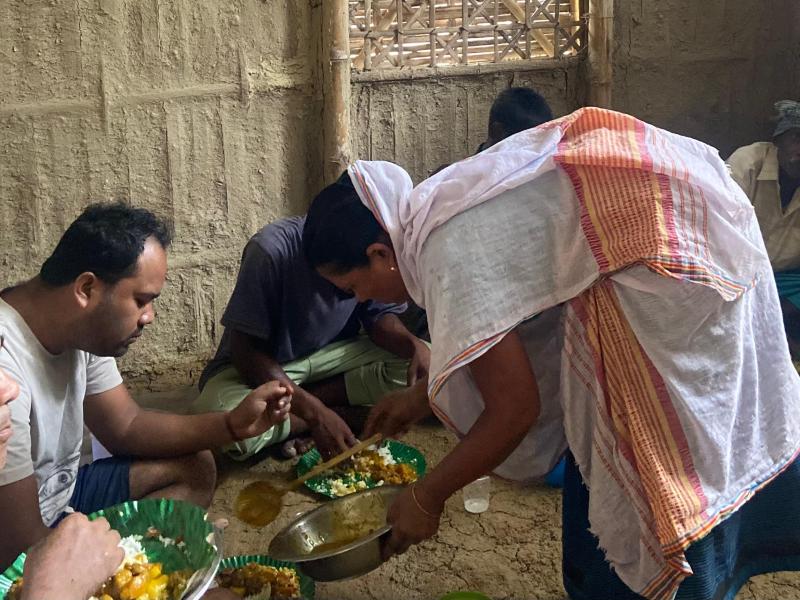
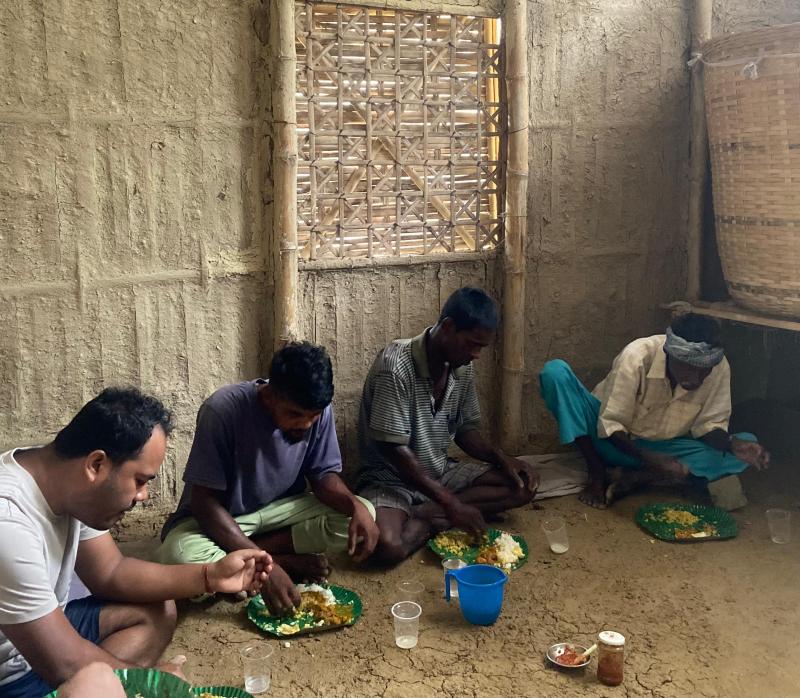
In two-weeks’ time - the ground turns green from golden with the freshly sprouted paddy which is now ready to be harvested systematically onto a separate land. These saplings will soon be picked and planted which will call for another gratifying event - the No Bhui- the event of new plantation for the ongoing harvest season.
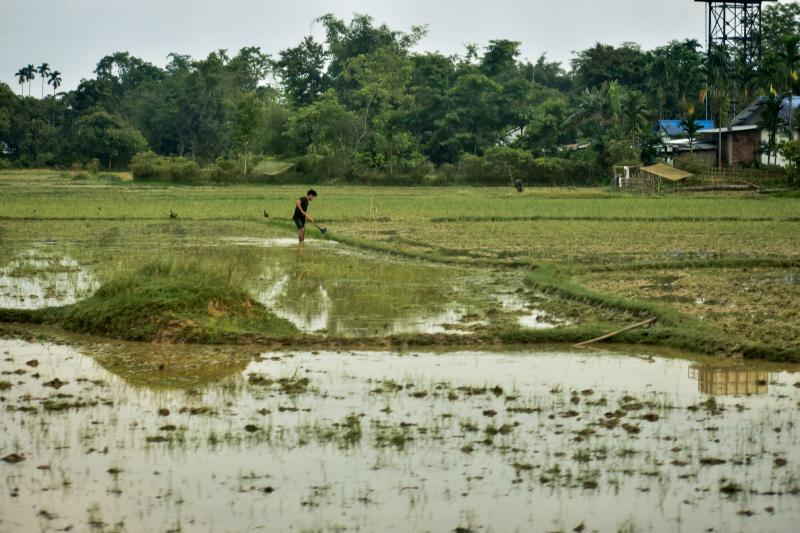
The author captured the images and videos at the personal sowing grounds of Mr. Anil Mohon, a resident of Jajali Habi village in Charaideo district in Assam.
 Navigations
  Quick Contact
 Subscribe Us
 Quick Mail