> Development > Livelihood


“There are no newsstands in Ulubari now. I once thought of employing a young boy and starting a tea stall to earn some profit, but then what would I do with the extra money? People won’t get their reading materials if the only paper shop left shuts down,” expressed Jatindra Nath Sarma, in his early 70s, who runs a small magazine shop near the Bishnu Ram Medhi flyover at Ulubari in Guwahati. He fondly recalls his boyhood days when his love for reading led him to devour almost every book available in the district library. An avid reader and collector, he once meticulously gathered every issue of the popular Assamese magazine Prantik. However, disaster struck when a sudden house fire reduced his beloved collection of books and magazines to ashes and memories.
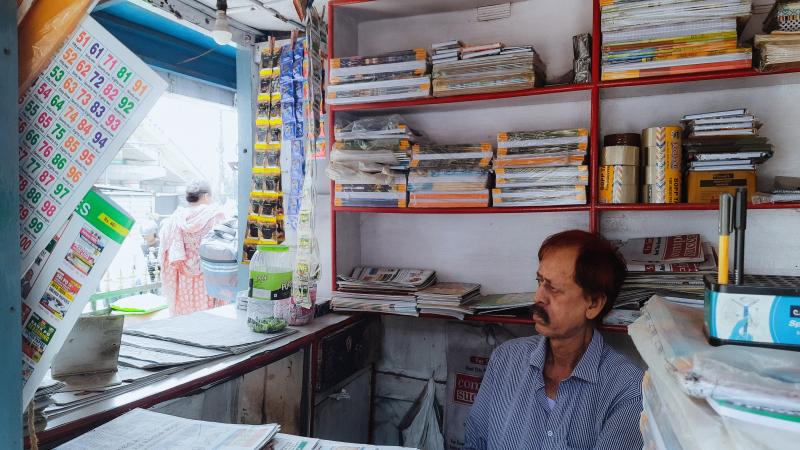
Magazines are tangible proof of how human thinking and intellect have evolved over time. The physical act of holding a magazine, flipping through its glossy pages, and even collecting them fosters a unique connection with the content. These shops selling magazines, once commonplace, are now quietly fading from our lives as reading culture experiences a profound decline.
Ajit Kalita, a magazine stall owner at the busy Panbazar intersection, conveys his frustration with the decreased readership. “Everybody is busy with their phones,” he says, watching people rush by, engrossed in their little devices. Some stop briefly to browse the collections he has on display or purchase pan masala and gutka that he stocks to make meagre earnings throughout the day. Despite being a crucial supplier of newspapers and magazines to various locations—on whom many still rely for their daily dose of information—he still struggles to make ends meet. What once were leisurely afternoons filled with animated discussions and debates near his stall have now become slow and silent hours.
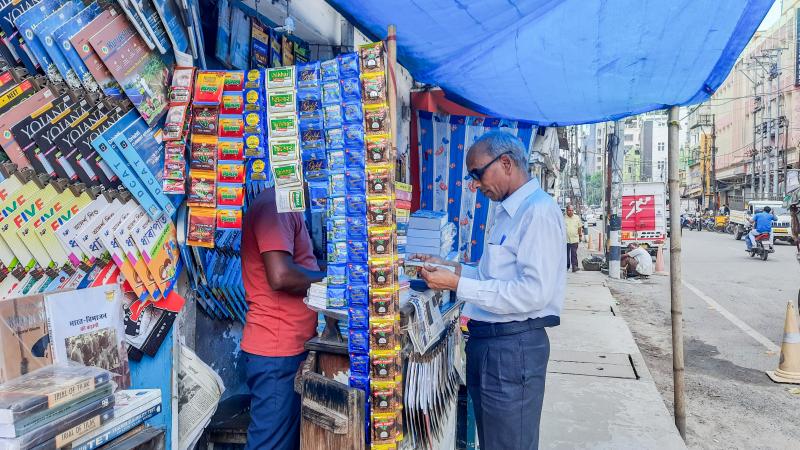
Manoranjan Kalita, who sets up his shop just around the Mahamaya restaurant corner in Panbazar, shares similar sentiments. Originally a pan dukan started by his father in 1982 to cater to passersby, Manoranjan expanded his shop over the years to include magazines, newspapers, and now even guidebooks for exam aspirants. "Every book is now available online, sometimes at even cheaper costs," he shares, a hint of resentment in his voice. "People always stick to their phones." With a mere magazine stand no longer sufficient for supporting his family of four, he decided to open a grocery shop as well. Now, his wife, son, and daughter also help him run the business.
“The people I knew went into different professions. The loss was too much to bear,” he recounts, reflecting on how many magazine sellers across the city shut their shops as the going got tough. Sitting at his long-held corner, he has watched decades pass, witnessing different political eras and profound shifts in society. A gentle old man, he has befriended people of every age group, who in turn cherish him as their khura.
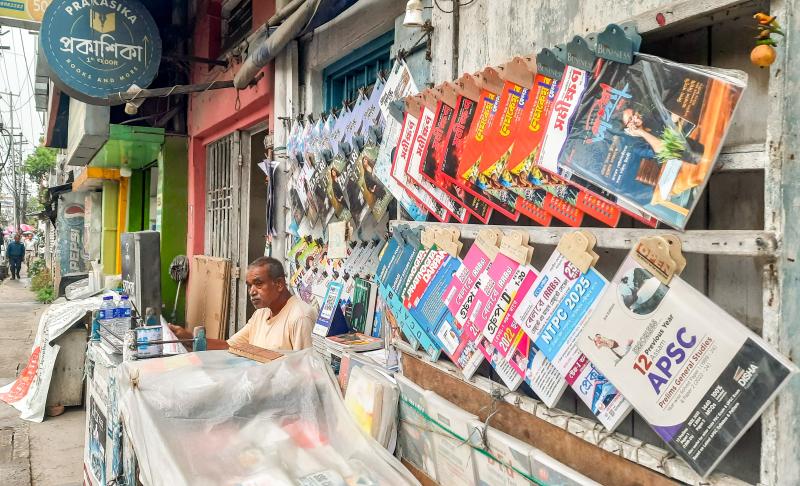
Magazine sellers are not just people who provide periodicals and publications; some have watched generations grow up before them and have lived through historical events. Their unassuming nature may make them seem like bystanders, but there is more to them than meets the eye.
One such witness to bygone years is Swapan Kr. Dutta, who has run his shop since the late 1950s. It all started when his father opened a small clock shop in the Panbazar area, gradually expanding to include stationery, cosmetics, and periodicals. What now appears as a meek nook among the rows of shops was once frequented by great personalities such as the late Sarat Chandra Sinha, former Assam Chief Minister; Syed Kirmani, wicketkeeper of the Indian team; Vijay Dahiya, former wicketkeeper; John Wright, captain of the New Zealand cricket team, and many legislators and Members of Parliament.
“The shop would fall short on space if I kept pictures from those times on display. People might think of it as mere stories now, but many famous personalities spent their evenings chatting in front of my shop.”
Asked why he chose this profession, his hunched self gleefully replied, “It’s for the convenience of the people.” The post-pandemic era has seen a significant drop in the sales of tangible media. Dutta recounts how almost seventy percent of magazines stopped publishing after the COVID-19 pandemic, unleashing silent mayhem in the lives of these vendors, which they helplessly endure.
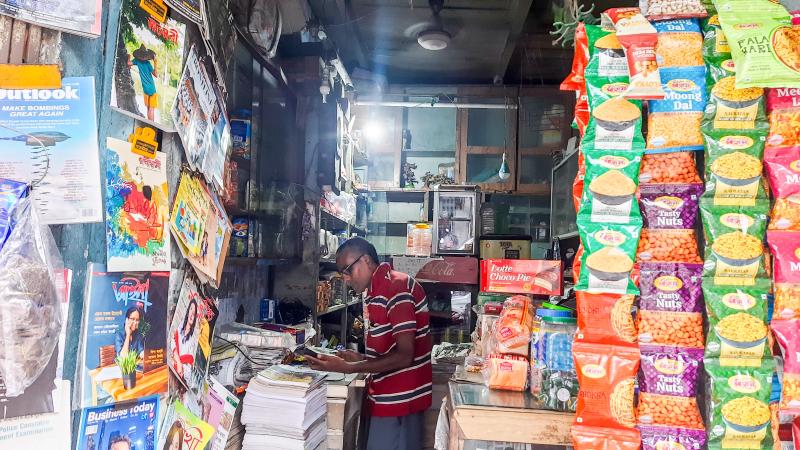
Selling only magazines and newspapers can rarely suffice as a livelihood anymore. More often than not, sellers turn to alternate goods to sell alongside magazines. Adapting to changing times has long been essential for these vendors. “I worried about the decreased sale of magazines and books for a while, but my son diversified the shop and added many new items to promote sales,” shared Jogendra Kalita, who has set up his shop in Bhangagarh daily for the past 30 years.
In his three decades of running the shop, he faced many challenges, but the one that troubled him the most was digitalization. The people who once frequented his shop now get their fix at their fingertips. They no longer need to go out of their way to buy an issue or flip the pages of a newspaper. All this has been quite miserable for Jogendra, as his shop often wears a desolate look now.
Jogendra's struggle isn't unique in Guwahati. Across the city, several roadside magazine sellers—once vibrant hubs of information and conversation—echo his sentiments. Many, like him, have watched their once-lively stalls transform into quiet outposts. “Earlier, the crowd made the area feel small, but we loved to see the public even if the day ended with low sales,” recalls Dipak Das, who wistfully remembers the days when Panbazar was a nucleus of activity with swelling footfalls.
Dipak has spent almost three decades running a magazine-only stall called Sikha Magazine. He cites how the relocation of major government offices, large-scale renovation, and overall rapid growth and development have further affected foot traffic.
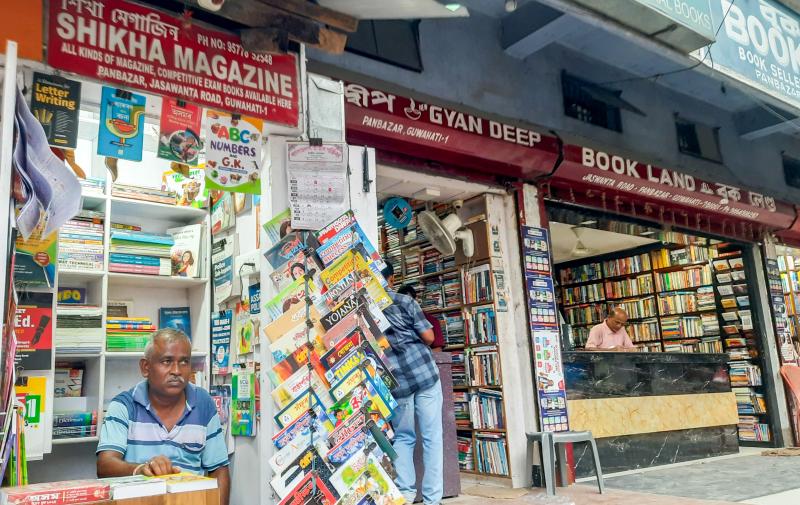
The relocation and demolition of government offices have especially impacted vendors who used to line the streets of Kachari Bus Stop area some years back. Bhogoban Sarma, one of the last remaining booksellers, states how sales and customer interactions have dwindled to the point where he is considering shutting down his shop by the end of this month and moving back to his village in Dimu, about 15km off Rangiya town in Kamrup district. The distance between Guwahati and Rangiya is about 48km.
Yet, despite the dwindling crowds and looming threat of closure, these sellers often speak of an intangible value that keeps them at their posts, hoping for that one customer who still seeks the satisfaction of a curated read. They highlight how the older generation still makes an effort to buy their favourite periodicals, often Prantik, Satsori, Bismoi, Goriyoshi, Nandini and Priyosakhi. For many, reading remains a cherished habit, and they continue to frequent these stalls to fuel their literary fire. In these exchanges, a precious bond often forms between seller and reader, a connection the impersonal online medium simply cannot replicate.
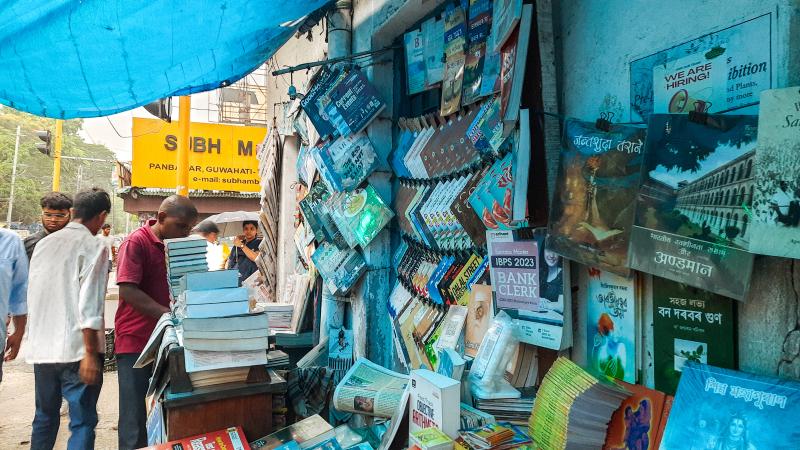
For dedicated readers, holding a physical magazine or newspaper goes beyond mere information consumption. “You can find more elaborative and substantive works in magazines than newspapers or everyday blogs, where issues are discussed and debated in a serious format. I just personally like the more intellectual tone,” explains Rohit Singh, a student of Cotton University, who is a keen reader of magazines.
For individuals like Manika Devee, an acclaimed short story writer in Assamese literature, reading magazines has been an integral part of her life. “My parents made magazines a must-have. We sometimes received new issues months later, but reading them was a requisite,” she shares, referring to a tradition she has now passed down to her own children to inculcate the habit of reading and promote language.
Readers also note that while accessibility to printed periodicals has improved over the years, rising costs have simultaneously contributed to reduced readership. “The current levels of economic insecurity make people more frugal with their spending, and magazines are seen as a waste when people assume they can read the news for free, ignoring the structural differences between everyday news coverage and the in-depth analysis only long-form magazine writing can provide,” elaborates Rohit.
J. P. Roy, the owner of Durga News Agency—one of the oldest suppliers of magazines in Guwahati—reveals that printing costs have steadily increased over the years, along with transport charges. Despite cheaper materials being used, magazine prices are higher than ever. “Children’s magazines like Tinkle, which used to cost around 20-30 rupees per issue, now retail for about 75 rupees!” Moreover, distributors mostly do not accept returns of unsold magazines nowadays, translating into direct losses for sellers.
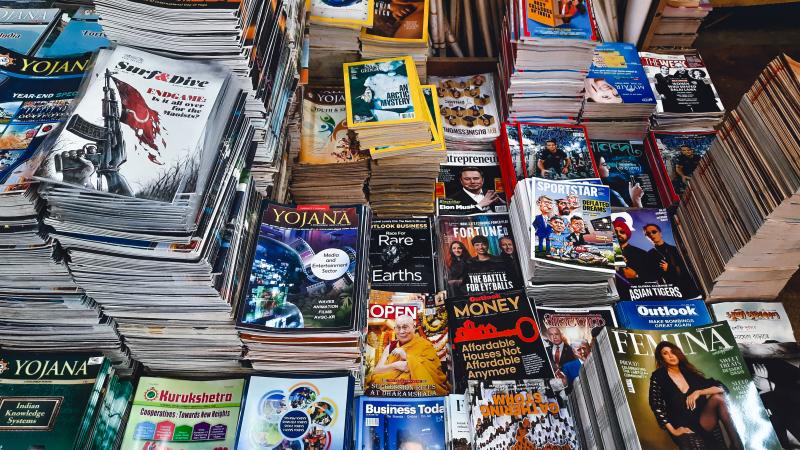
The sellers, despite being sorely aware of the facts, still stand resilient through it all. They do not want to be called ‘great’ for fighting their unseen battles. They persevere, believing in the perceptible joy of reading, buying, and selling magazines. Biman Goswami, who runs a shop called Art and Stationery in Silpukhuri and feels a glimmer of hope after the pandemic, says, “The real joy of reading magazines is from the physical version. The people who read know the joy of the process, and that is what keeps it going.”
 Navigations
  Quick Contact
 Subscribe Us
 Quick Mail